The Origins and Evolution of ANAVETS – Tracing Canada’s Oldest Veterans’ Association
The Army, Navy & Air Force Veterans in Canada is Canada’s oldest veterans’ association. Although the precise start-date is obscured by time, it is known that a charter was given in 1840 by Queen Victoria to create a unit in Montreal. It is felt that units existed well before that time, perhaps as early as the Conquest of New France in the seventeen hundreds.
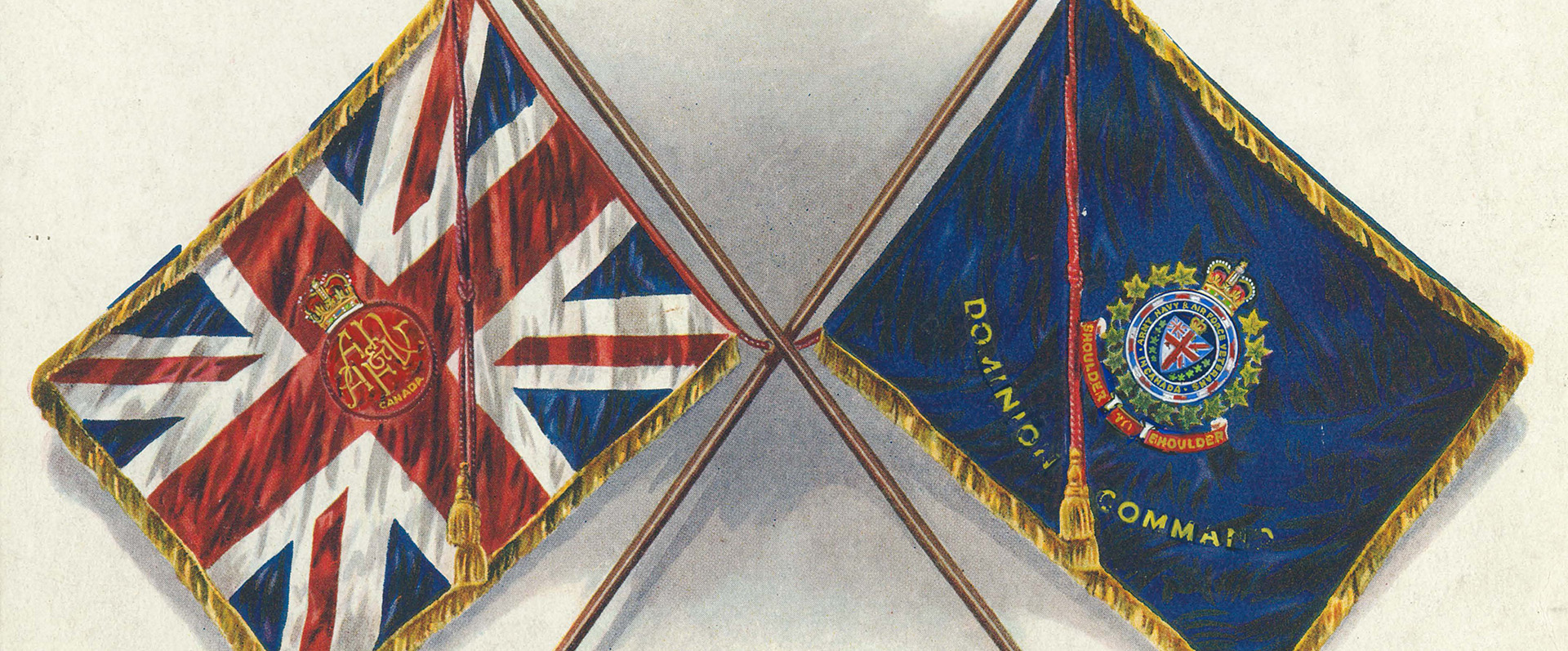
The Association derives its name from those remnants of British and French colonial regiments which were left in Canada when their regiments returned to Britain or France following their tours of duty protecting the colonies. These men banded together to exchange information on service benefits available to them and to fraternize. They called themselves “The Army Veterans in Canada” so that when they were in Britain they could denote their location as opposed to the Army Veterans in Australia or South-Africa. The reference to Canada became an integral part of the Association’s title, as incorporated by the Government of Canada in 1917.
Following the War of 1812 sailors from the British Navy which patrolled the Great Lakes and the eastern seaboard, who remained in Canada, joined the Army Veterans in Canada and the title was changed to “The Army and Navy Veterans in Canada”.
The association was also composed of volunteers who answered the call of the Canadian Government for active service during the Fenian Raids of 1860, 1870 and 1871, the Red River Expedition of 1870, and the North-West Rebellion of 1885.
A cairn was raised in 1902 by the Toronto Army and Navy Veterans Association to commemorate the first Lieutenant-Governor of Ontario, John Graves Simcoe, founder of York (now Toronto) and to mark the Military Burying Grounds (now the Victoria Memorial Gardens) situated in a park at the junction of King St. West and Bathurst St. in Toronto.
In April 1909 at Montreal, Mr. W. W. Marsh of the Army and Navy Veterans Association was one of the founding members of the Last Post Fund.
During and following the Second World War, members of the Air Force were welcomed as members and the official title the “The Army, Navy & Air Force Veterans in Canada” was enacted, by an amendment to our Act of Incorporation, by Parliament in 1946. The Association uses the short form ANAVETS to identify itself.
The Story Behind Our Symbol
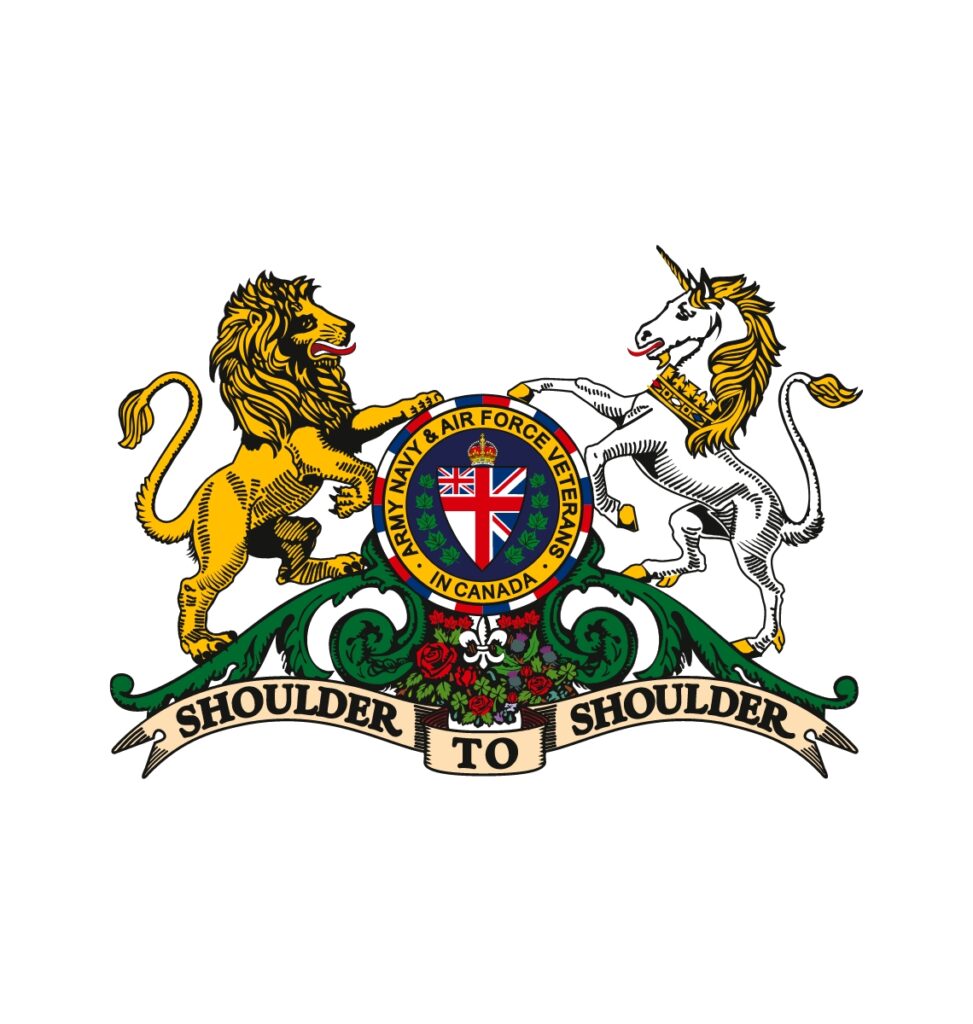
The ANAVETS Arms symbolize its long history which goes back to the 1840s and the time when Canada was a British colony. Then we were called, THE ARMY AND NAVY VETERANS IN CANADA and the shield displays the flags of its first members. The White Ensign was and still is the flag of the Royal Navy and the Royal Union Flag, the Union Jack, signifies the army. The crown, believed to be a replica of Queen Victoria’s Crown, represents the monarch at the time of our formation.
The ten maple leaves were added later to stand for our ten provinces. The red, white and blue annulus comprises the colours of the Union Jack which was Canada’s official flag at that time. The lion and unicorn supporters derive from the Royal Coat of Arms as Canada’s Arms only date from 1921. The flowers in the compartment refer to our founding heritage. It will be noted that there is no reference to the Air Force. That is because the name was not officially changed to include the Air Force until 1946 and by that time the Arms were too well entrenched to change other than by adding of the tenth maple leave when Newfoundland came into Confederation in 1949.